Communication Cadences Between Founders and External Dev Teams
Regular syncs let external teams understand the reasoning behind requests, not just execute tasks.
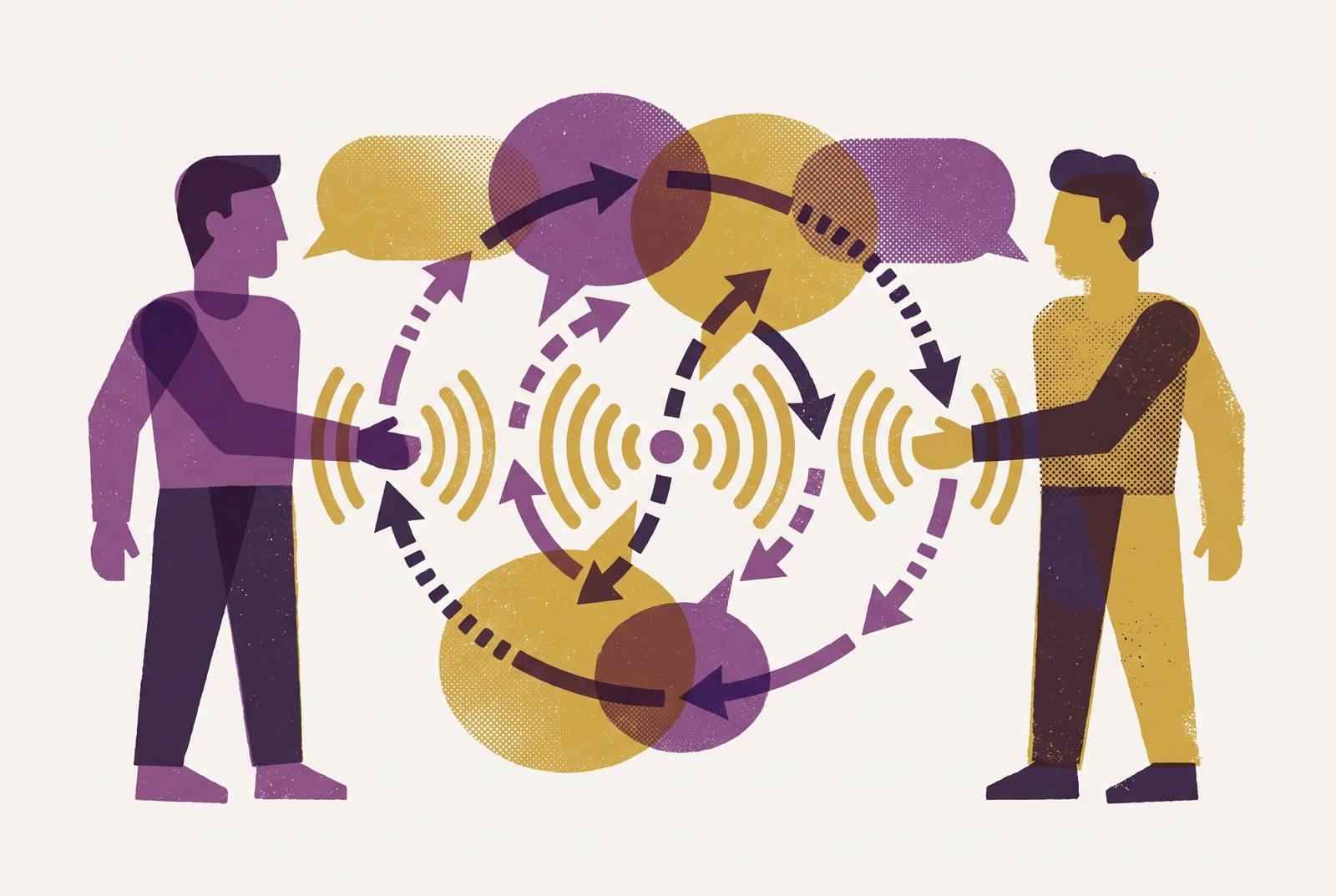
Communication cadences between founders and external dev teams are about more than keeping meetings on the calendar. Their real job is to move enough product context to the people writing code that they can exercise judgment between conversations. A useful cadence makes the founder’s reasoning available to the team.
Why an external dev team without enough context defaults to ticket-clearing instead of product thinking
A founder sends every conversation through a project manager, who turns requests into tickets and tells the founder how the work is going. The developers receive the work but not the reasoning. They can finish the tasks exactly as specified and still produce a release that misses the founder’s intent. The project manager has become a wall where there should be a bridge, and no one may see the gap until they check the result.
This is context starvation. The founder holds implicit knowledge about user intent, business constraints, and acceptable risk that the external team has never received. Without it, literal execution is the defensible choice. How could a developer weigh a trade-off against a business constraint no one told them about? The objection that Jira tickets contain all the context confuses task detail with product understanding. A ticket can describe what to build without explaining which outcome should win when two goals conflict.
What cadence actually is when it functions as a context-transfer mechanism
To get past that wall, regular communication has to share both the work to be done and the reasons behind it. A cadence is the planned structure of meetings, updates, reports, and decision points through which that happens. Its purpose extends beyond the conversation itself. The team needs to know enough to act when the founder is away, so it can make uncertain choices without waiting for the next call.
That changes how the structure is designed. Each touchpoint needs a clear purpose, someone responsible for initiating it, and a way for the team to show that it understands enough to proceed. Frequency, schedule, and duration make the pattern predictable, but they cannot supply missing substance. The founder and team therefore need to determine what the team needs to know, how that knowledge reaches them, and what their subsequent decisions reveal about whether it arrived.
How meeting type, not meeting frequency, determines how much context actually transfers
Status, FYIs, routine approvals, and documentation generally belong in asynchronous communication. They can be read and referenced without gathering everyone at once, and they leave a searchable record. Ambiguity needs a different kind of exchange. Trade-offs, conflict, and choices that have real consequences are easier to talk through live because people need to work through what they are unsure of together. A live decision still needs a written account if people outside the meeting are to use it later.
The distinction depends on the content. A routine approval may need only a short exchange, while an apparent approval request that hides a consequential trade-off belongs in a conversation. Likewise, a daily standup is for blockers and what needs doing now, which leaves other subjects for the team to discuss elsewhere. Using a live call for routine information consumes calendar space without adding much understanding. An async thread about a real conflict can leave people making one unsure guess after another without settling the issue.
For distributed teams, predictability supports that choice of vehicle. Knowing when a touchpoint will occur lets people hold suitable questions for it rather than interrupting deep work or waiting through an overnight delay. Availability needs to work across regions as well. A schedule that consistently inconveniences the same group makes participation harder, even when the meeting’s purpose is sound.
The layered rhythm that sustains context across a full build cycle
While the team is building, the daily layer keeps blockers and what needs doing now in view. The weekly sync then gives the founder and team room to review work, discuss unresolved obstacles, and share product context that has changed. These layers serve different horizons of the same work. Without the daily view, the team may identify blockers late. Without the weekly exchange, the team may keep working while what it knows about the product falls out of date.
A written update that the team can expect from the founder each week links those conversations. It covers what happened, what is coming, and what the founder is thinking about, giving the team something to consult between syncs. The reasoning becomes searchable. Where sprint reviews run on a bi-weekly rhythm, they provide a further point to examine the build and surface debt. Monthly and quarterly sessions take the longer view through retrospective review and forward planning, which immediate execution discussions can otherwise crowd out.
Together, these layers prevent urgent work from becoming the only shared context. They are not a fixed meeting quota. Discovery calls for more frequent collaboration, active delivery for regular execution check-ins, and maintenance for lighter updates. Post-launch review and follow-up from time to time keep the founder and team connected to the product after the initial build, even as they drop some meetings that helped during discovery.
How the MVP-to-production transition breaks the cadence and why founders let it happen
The move from MVP to production exposes decisions that speed allowed the team to leave unresolved. Founders ship, validate demand, and add features to code designed for the initial build. Those shortcuts may have been the right call. The failure occurs when no recurring conversation asks whether the architecture still fits the job, leaving undocumented decisions to determine the cost of the next sprint.
The team needs an explicit distinction between acceptable debt and non-negotiable quality floors. Intentional, documented shortcuts can include manual admin processes, simple non-scalable architecture, and hardcoded business rules that can be refactored later. Data security and privacy, core user flow reliability, version control and deployment, and basic error handling for user-facing features cannot be deferred on the same basis. Speed does not erase that distinction. Unless the founder and team discuss it, engineers cannot know which compromises reflect product strategy and which were never intended.
Engineering-only retrospectives do not close this gap because the founder cannot reason about a debt register that remains invisible. The founder may first recognize the problem when a feature takes three times as long as expected or Series A due diligence reveals the accumulated debt. Turnover adds another source of context loss. Each departure can leave a new engineer inheriting undocumented choices with nobody available to explain them. So the move to production calls for the team to share context again as well as add to the feature backlog.
Making technical debt a standing agenda item, not an engineering-only concern
The practical response is to make the debt register a standing item at the sprint review or weekly sync. It needs the founder in the conversation. A rule of thumb is to budget ten to twenty percent of each sprint for maintenance and debt repayment, with the founder seeing and approving that allocation rather than discovering it indirectly through slower feature delivery.
The founder’s role is to supply priorities. Which user flows are growing fastest, what features are coming next quarter, and how much downtime is tolerable all affect the order of repayment. The external team cannot infer those answers reliably. Making them explicit lets engineers weigh debt against the product’s likely demands instead of treating every shortcut as equally urgent.
For teams using AI-assisted development, the weekly sync also needs a question about how that work is governed. Is a senior engineer directing a methodology, or has AI use replaced architectural thinking? The founder needs to hear about that distinction before the team makes a choice with real consequences. A long-term technical partner can sustain this discussion beyond launch and through production. Its value here is continuity, with both parties reasoning from a debt register that stays current.
What a single source of truth does that meetings cannot
A shared, maintained documentation system lets context survive the people and conversations that first produced it. Decisions have one home people can trust, so someone who joins mid-project can understand them without going through all the earlier calls. The record also serves the founder between syncs. Roadmaps, architecture decisions, onboarding guides, and API docs give the founder and team a shared way to check whether the build still fits product intent.
The decisive practice is consistent use. A decision remembered by meeting attendees or buried in a Slack thread is not readily available to someone who was absent. The founder has to model the alternative by using the decision log and keeping the roadmap current between sprints. Otherwise, the apparent source of truth becomes another unreliable place to check. That habit comes before choosing tools, because a platform cannot keep the reasoning if no one writes it down.
How the right tooling layer shapes what questions a founder can bring to each meeting
A platform that exposes the roadmap, sprint state, and decision log changes what the founder can ask at the weekly sync. Instead of requesting a basic account of progress, the founder can arrive with questions about specific choices. Access makes the conversation more informed. The relevant tool choice therefore depends on what the cadence needs to make visible, rather than which platform appears to offer the most features.
Notion blends databases with documentation for interconnected knowledge such as roadmaps, specs, decision logs, and sprint planning. Baserow and NocoDB address the need for self-hostable, open or source-available alternatives where governance requirements or regulated data shape the choice. Supabase is in a different category when the team needs a real SQL database as well as structured project tracking. These tools fit different needs. The practical test is whether the stack consolidates communication and makes progress clear enough that the founder does not need an unplanned call to understand where the build stands. Adding more tools without agreeing on how to use them works against that goal by splitting the work into silos.
How to tell when the cadence is working and when to adjust it
Technically complete work that misses product intent is a sign that the way the team shares context needs work. So are late blockers and repeated questions whose answers never reached a shared artifact. More meetings are not automatically the remedy. The failure may lie in the vehicle, the missing record, or the absence of a conversation about a changed priority. Evaluating the cadence means asking where the context stopped moving.
Some changes do call for more frequent or deeper discussion. A move from discovery into active build, or from MVP into production, can require a substantial reset of the team’s understanding. New engineers also need context that tickets alone cannot supply. A recurring pattern of decisions the founder would have made differently is another reason to revisit the exchange, because it suggests that the team and founder are using different assumptions.
The reverse is just as important to recognize. More communication can move async when the build is stable, the team has shown it can make low-stakes choices on its own, and the documentation is truly up to date. When the relationship is mature or the product is in post-launch maintenance, updates may be lighter and less frequent while keeping the founder and team aligned. Regular review and team feedback help distinguish that earned reduction from a founder simply becoming less available.
The clearest success signal is the external team surfacing trade-offs the founder did not ask about and asking which outcome should take priority. That shows the team has enough product context to see beyond the ticket and exercise judgment about the work.